CEMS (Continuous Emissions Monitoring System)
27/04/2026
WQMS (Water Quality Monitoring System)
27/04/2026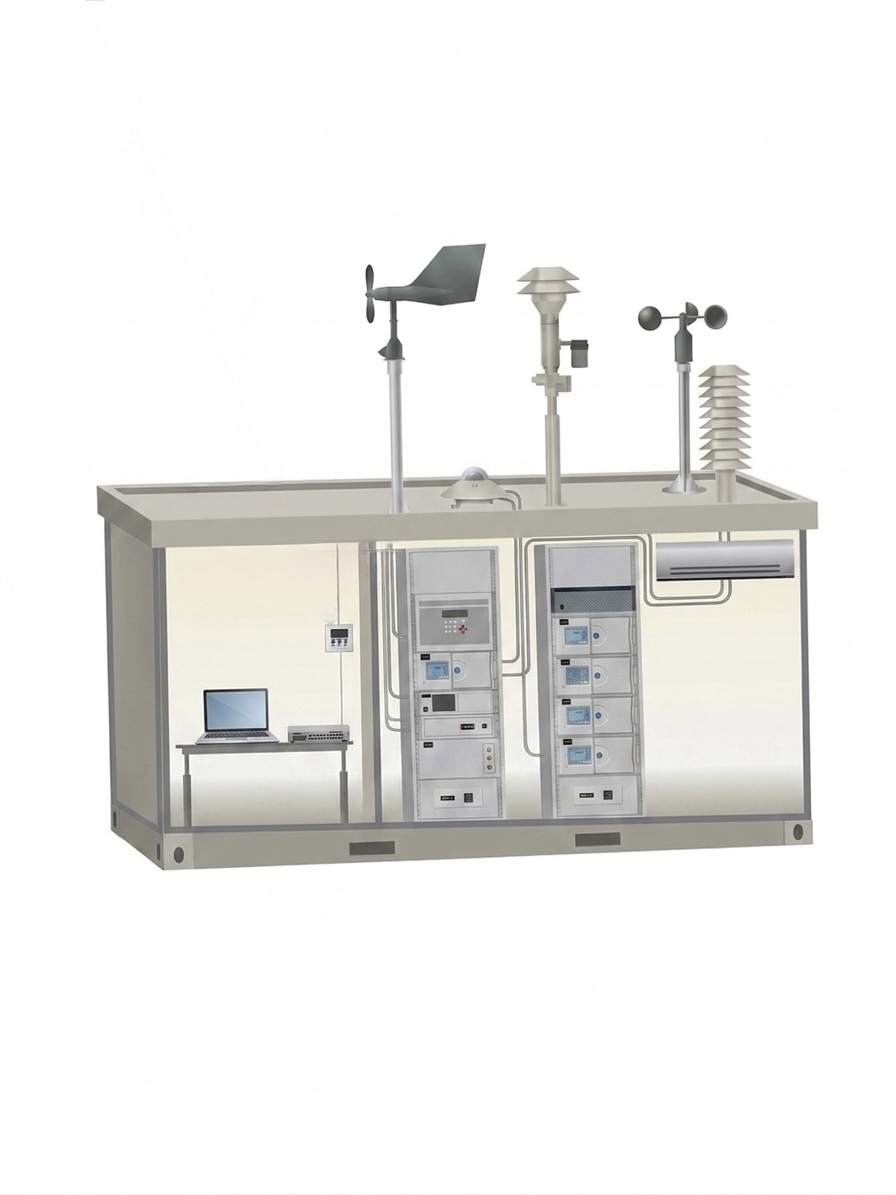
AQMS ( Air Quality Monitoring System)
AQMS – This is a system that enables real-time monitoring of air quality, protects public health, and supports informed environmental decision-making based on actual data.
AQMS – Air Quality Monitoring System
AQMS
(Air Quality Monitoring System) is an advanced environmental monitoring solution designed to provide continuous, real-time measurement, analysis, and reporting of air quality conditions. The system enables governments, municipalities, industrial facilities, research institutions, and environmental organizations to monitor atmospheric pollutants, protect public health, ensure regulatory compliance, and make informed decisions based on accurate environmental data.
As urbanization, industrialization, transportation emissions, and climate-related challenges continue to impact air quality worldwide, the need for reliable and intelligent monitoring systems has become increasingly important. AQMS addresses these challenges by delivering precise, real-time information about air pollution levels and environmental conditions through an integrated network of sensors, analyzers, communication technologies, and centralized data management platforms.
The AQMS platform continuously monitors key air quality parameters, including PM2.5, PM10, carbon monoxide (CO), carbon dioxide (CO₂), nitrogen dioxide (NO₂), sulfur dioxide (SO₂), ozone (O₃), volatile organic compounds (VOCs), hydrogen sulfide (H₂S), temperature, humidity, atmospheric pressure, wind speed, and wind direction. By collecting and analyzing environmental data around the clock, AQMS provides a comprehensive understanding of air quality conditions and pollution trends across monitored locations.
One of the primary advantages of AQMS is its ability to provide real-time monitoring and instant access to critical environmental information. Traditional air quality assessments often rely on periodic sampling and delayed laboratory analysis, limiting the ability to respond quickly to pollution events. AQMS eliminates these limitations by continuously transmitting data to cloud-based or on-premise monitoring platforms, allowing operators and decision-makers to access live information from any location.
The system features intelligent alerting capabilities that automatically notify users whenever pollutant concentrations exceed predefined thresholds or regulatory limits. These alerts help authorities and organizations respond rapidly to environmental incidents, industrial emissions, traffic-related pollution spikes, wildfire smoke events, or other air quality concerns before they pose significant risks to human health and the environment.
AQMS is widely used across numerous sectors and applications, including smart cities, industrial zones, manufacturing facilities, power plants, mining operations, oil and gas installations, transportation networks, airports, seaports, construction sites, educational institutions, healthcare facilities, and environmental monitoring programs. Its flexible and scalable architecture enables deployment across single sites or large regional monitoring networks, supporting both urban and remote environments.
The system plays a critical role in protecting public health by providing reliable information about exposure to harmful pollutants. Air pollution has been linked to respiratory diseases, cardiovascular conditions, allergies, and other serious health issues. Through continuous monitoring and accurate reporting, AQMS helps authorities implement preventive measures, issue public health advisories, and develop strategies aimed at reducing pollution exposure and improving overall quality of life.
In addition to real-time monitoring, AQMS provides advanced data analytics and reporting capabilities. Users can access customizable dashboards, historical data records, trend analyses, heat maps, and performance reports that support environmental planning and regulatory compliance. These analytical tools enable organizations to identify pollution sources, evaluate mitigation strategies, assess long-term environmental changes, and optimize operational processes.
The platform supports seamless integration with SCADA systems, IoT networks, weather stations, GIS platforms, cloud infrastructures, and enterprise management systems. Secure communication protocols ensure reliable data transmission and storage, while user-friendly interfaces make environmental information accessible to technical personnel, regulators, and management teams alike.
Another significant advantage of AQMS is its contribution to sustainability initiatives and environmental governance. By providing transparent and verifiable air quality data, the system helps organizations meet environmental, social, and governance (ESG) objectives, support sustainability reporting, and demonstrate compliance with local and international environmental regulations. This transparency strengthens stakeholder confidence and promotes responsible environmental management.
AQMS can be customized to meet specific monitoring requirements, ranging from compact urban monitoring stations to highly sophisticated industrial-grade environmental monitoring networks. The system supports both fixed and mobile installations, allowing organizations to monitor air quality in permanent locations or conduct temporary environmental assessments during projects, events, or construction activities.
Furthermore, AQMS supports predictive environmental management through the use of advanced analytics and forecasting models. By identifying patterns and emerging trends in air pollution data, the system enables organizations to anticipate environmental risks, optimize mitigation measures, and improve long-term planning strategies. This proactive approach helps reduce environmental impacts, lower operational risks, and support sustainable development goals.
By combining real-time monitoring, intelligent analytics, automated reporting, regulatory compliance support, and scalable deployment options, AQMS provides a comprehensive solution for modern air quality management. Whether deployed by government agencies, industrial operators, environmental consultants, research organizations, or smart city initiatives, AQMS delivers the reliable data and actionable insights needed to improve air quality, protect public health, and support a cleaner, healthier, and more sustainable future.